
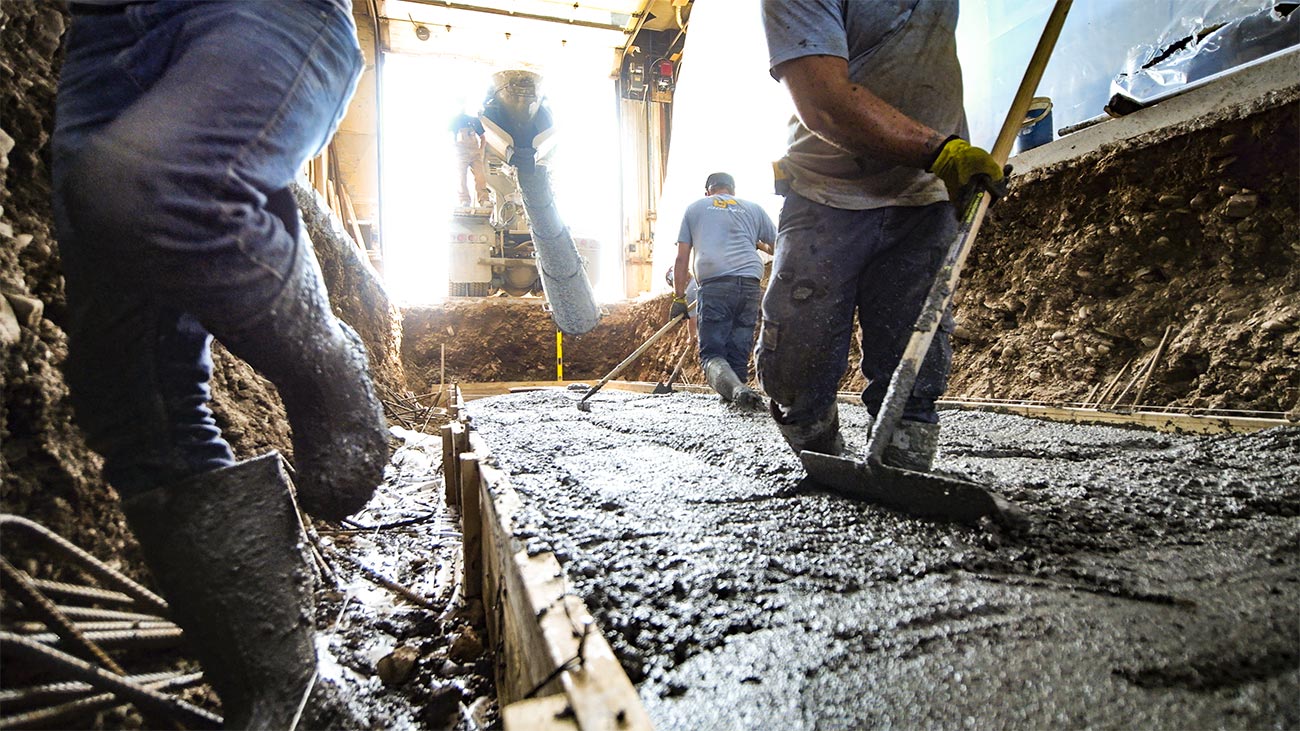
Invisible at first glance, concrete is nonetheless everywhere.
From the foundations of our homes to the infrastructure connecting our communities, it underpins the modern world. Second only to water, it is the most widely used material on the planet. This is due to its unique qualities: strength, versatility, ease of handling, and excellent value for money.
Globally, it is estimated that approximately 3 tonnes of concrete are used per person each year—a figure that illustrates the material’s fundamental role in our societies. Yet, behind this ubiquitous material lies a crucial truth: the quality of concrete depends as much on its application as on the product itself.
A high-performance material… when it is properly mastered.
Concrete is known for its longevity, but only when it is designed, poured and processed correctly. Poorly executed concrete can quickly lose its qualities: cracks, sagging, water infiltration or premature degradation.
That is why field expertise makes all the difference, particularly in demanding environments such as those of Eastern Quebec and Northern New Brunswick.
Whether it is residential, commercial, industrial or civil engineering projects, construction sites in the region present their own challenges: restricted access, variable climatic conditions, soil characteristics and tight deadlines.
Each project requires a tailored approach, aligned with the realities on the ground and the client’s needs.
Structural problem.
Even the best concrete can be compromised when:
- The soil is not properly prepared
- Weather conditions are unpredictable.
- The vibration, the formwork, or the curing process is poorly executed.
- The actual loads exceed the initial design
- These situations can lead to significant costs and considerably reduce the lifespan of a structure.
A professional approach allows concrete to be transformed into a true long-term investment.
A comprehensive mastery of the works, which covers formwork, pumping, foundations and finishing, makes it possible to deliver works that are solid, precise and durable.
Each project is carried out with rigor, supported by high-performance equipment and an experienced team capable of adapting to the specific realities of each site.
Project stages:
- Needs and context assessment.
Analysis of the soil, existing structure, and client objectives. - Selection of technical solutions.
Selection of formwork methods, pumping methods, and concrete characteristics. - Controlled execution of the work.
Precise implementation, compliance with standards, and continuous monitoring. - Finishing and quality control.
Final checks ensuring strength, durability and long-term performance.
A well-executed concrete intervention allows for:
- Reliable and durable structures
- Improved resistance to regional climatic conditions
- Long-term peace of mind
- Increased value for buildings and infrastructure
- Concrete then becomes much more than a material: it becomes a foundation of trust.
Regional success factors.
In Eastern Quebec and Northern New Brunswick, the success of a concrete project depends on:
- A thorough knowledge of the territory and soils
- Anticipating weather conditions
- An experienced local team
- Rigorous practices adapted to regional realities
- It is this combination that makes it possible to obtain durable structures, even in demanding contexts.
Customer testimonial
“Efficient and professional service, plus excellent support beforehand. The work was done quickly, and the team was flexible when we had to change the schedule due to some unforeseen circumstances on the job site. They always responded promptly to calls and emails. Excellent service and a beautiful, high-quality result.”
– Chloé Boissonnault, Bonaventure